
Have you ever wondered why some businesses grow like crazy while others struggle even with a great product? Sounds wild, right? In my opinion, the answer usually comes down to one thing: they don’t understand the balance between marketing vs sales, and trust me, this balance is basically the heartbeat of every business growth strategy.
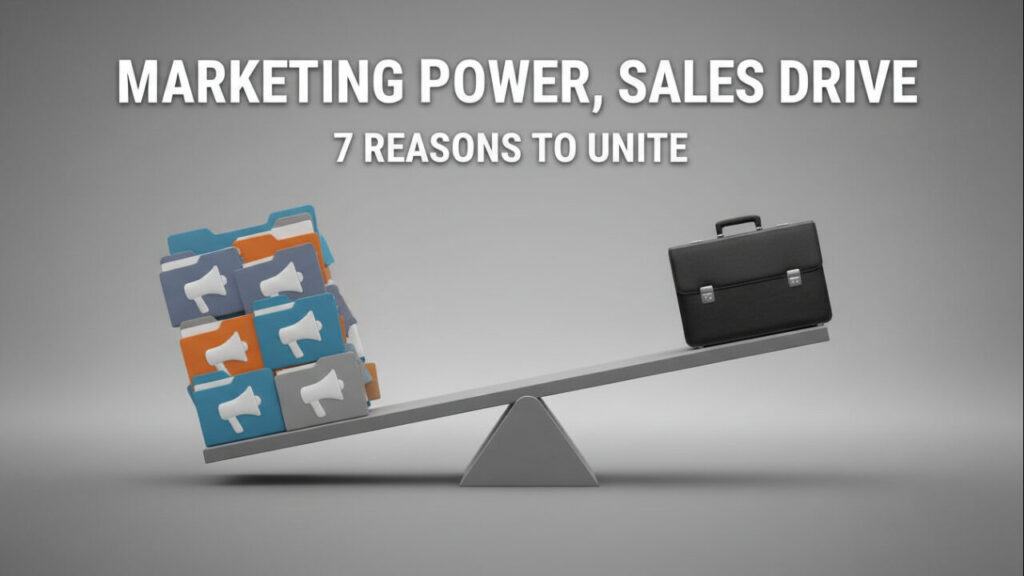
Marketing vs Sales, What’s the Real Difference?
Although individuals often confuse them, these superpowers are completely distinct.
1) Role of marketing in brand awareness
Marketing is everything you do to attract people before they even think about buying.
It’s the memes, stories, ads, blogs, reels, and word-of-mouth that create a connection with your audience. Marketing emphasizes:
- customer acquisition
- lead generation
- brand awareness
- building trust through content
- shaping the customer journey
Marketing answers “Why should anyone care?”
2) Role of sales in revenue generation
Sales is what happens after someone is already interested.
It’s human-to-human conversations, closing deals, and turning “maybe later” into “let’s do this”. Sales focuses on:
- conversion rate
- negotiation
- follow-ups
- sales pipeline
- revenue growth
Sales answers “How do we turn interest into money?”. That’s the difference between marketing and sales, plain and simple.
Why Understanding Marketing vs Sales Matters for Business Growth
Honestly, I think most companies fail not because their product is bad, but because they confuse these two functions. When you get the difference right, you gain:
- better customer acquisition
- higher conversion
- stronger brand recall
- a smoother go-to-market strategy
- faster revenue growth
In today’s world, [ misalignment = money lost ]. That’s why every strong business growth strategy relies on the perfect balance of both.
Marketing Strategy vs Sales Strategy Explained
Consider them as two distinct sides of the same coin, while they appear different at first glance, both are equally vital and play an essential role in the bigger picture.
Marketing funnel vs sales funnel
Marketing funnel = Attract → Engage → Nurture
Sales funnel = Qualify → Pitch → Close
Lead generation vs conversion
Marketing = Getting people in the door
Sales = Turning them into paying customers
Common misconceptions about marketing and sales
- “Marketing is just advertising.” → Nope. It’s brand building + storytelling.
- “Sales is only about persuasion.” → Nope. It’s relationship-building.
- “One can replace the other.” → Absolutely not.
When combined, these elements create a comprehensive and complete representation of the entire customer journey.
How Marketing and Sales Work Together in a Business Growth Strategy
Let’s be honest, modern businesses need both teams working like best friends, not rivals.
How modern startups build unified growth teams
Startups today are replacing separate departments with:
- growth teams
- CROs (Chief Revenue Officers)
- integrated CRM systems
- shared dashboards
Why? Because alignment = scale.
Tools for aligning marketing and sales
These tools help track leads, improve conversion, and bring transparency across both teams.
Real-World Marketing vs Sales Examples You’ll Actually Relate To
Example 1: A D2C Skincare Brand
- Marketing: Creates educational reels + influencer collabs.
- Sales: Closes deals via WhatsApp + upsells combos.
Example 2: A Gym Startup
- Marketing: Runs local ads + free trial campaigns.
- Sales: Converts walk-ins and follow-up leads into memberships.
Example 3: A SaaS Company
- Marketing: Writes blogs, publishes case studies, runs webinars.
- Sales: Schedules demos and finalizes subscription plans.
Marketing brings people to the door.
Sales opens it and welcomes them in.
Marketing vs Sales for Startups, What Beginners Must Know
When you’re early-stage, you don’t need perfect departments. You need clarity.
Startup must-dos:
- Build brand → through social media, blogs, and community
- Build trust → through proof, testimonials, case studies
- Build systems → CRM, pipeline, automation
Why startups fail at sales vs marketing?
Because they expect one team to do both.
But the truth? Marketing creates demand; sales captures it. For beginners, focus on:
- customer journey
- product-market fit
- inbound vs outbound strategy
- startup scaling
- digital marketing trends
- retention vs acquisition
If you want a quick deep dive on building your first 100 customers without spending a Rupee, check this guide:
👉 Click Here









Leave a Reply